
Stadium design has traditionally been centred around one audience: the supporter.
That will always matter. The atmosphere, identity and emotional connection of a sports venue ultimately comes from the people who fill it every week. But modern stadiums also need to work for another increasingly important audience: commercial partners.
Sponsorship today is about much more than putting a logo above a doorway or around the side of the pitch. Brands want to become part of the experience. They want spaces where they can entertain clients, engage customers, tell their story and demonstrate why their partnership with a club matters.
For clubs, that creates an interesting design challenge.
How do you give a sponsor a meaningful presence without turning a hospitality suite into a showroom? How do you create an environment that feels unmistakably connected to a commercial partner while still belonging inside the stadium?
The answer lies in designing the experience first and allowing the branding to become part of it.
How Can Stadium Design Improve Sponsor Value?
The commercial value of a sponsorship does not stop when the referee blows the final whistle.
A well-designed stadium partner lounge can become a physical representation of the relationship between a club and its commercial partner, giving the sponsor somewhere to host, activate and engage throughout the year.
That makes the environment itself part of the sponsorship proposition.
Rather than seeing a sponsored suite as somewhere to display logos, clubs can think about how the space communicates what the partnership actually represents. Materials, lighting, furniture, digital content, memorabilia and subtle visual cues can all contribute to the story.
When those elements work together, guests should not need to be repeatedly reminded who the sponsor is. They should feel the brand through the experience.
That distinction is important.
A space dominated by logos can quickly begin to feel temporary or overly commercial. A thoughtfully designed branded hospitality suite, on the other hand, can communicate the same identity in a far more sophisticated way.
What Makes a Good Branded Hospitality Suite?
The best sponsor-led hospitality environments achieve a careful balance between three identities: the sponsor, the club and the guest.
None should completely overpower the others.
The sponsor needs a recognisable presence and an environment that reflects its positioning. The club needs the space to remain connected to its history, supporters and stadium. Most importantly, the guest needs somewhere that feels comfortable, memorable and genuinely enjoyable to spend time in.
DT Sports’ work with Savvy and Adidas demonstrates how this balance can work.
Across hospitality suites at the Emirates Stadium, Anfield and Old Trafford, each environment needed to communicate the Adidas identity while remaining specific to the club and stadium around it.

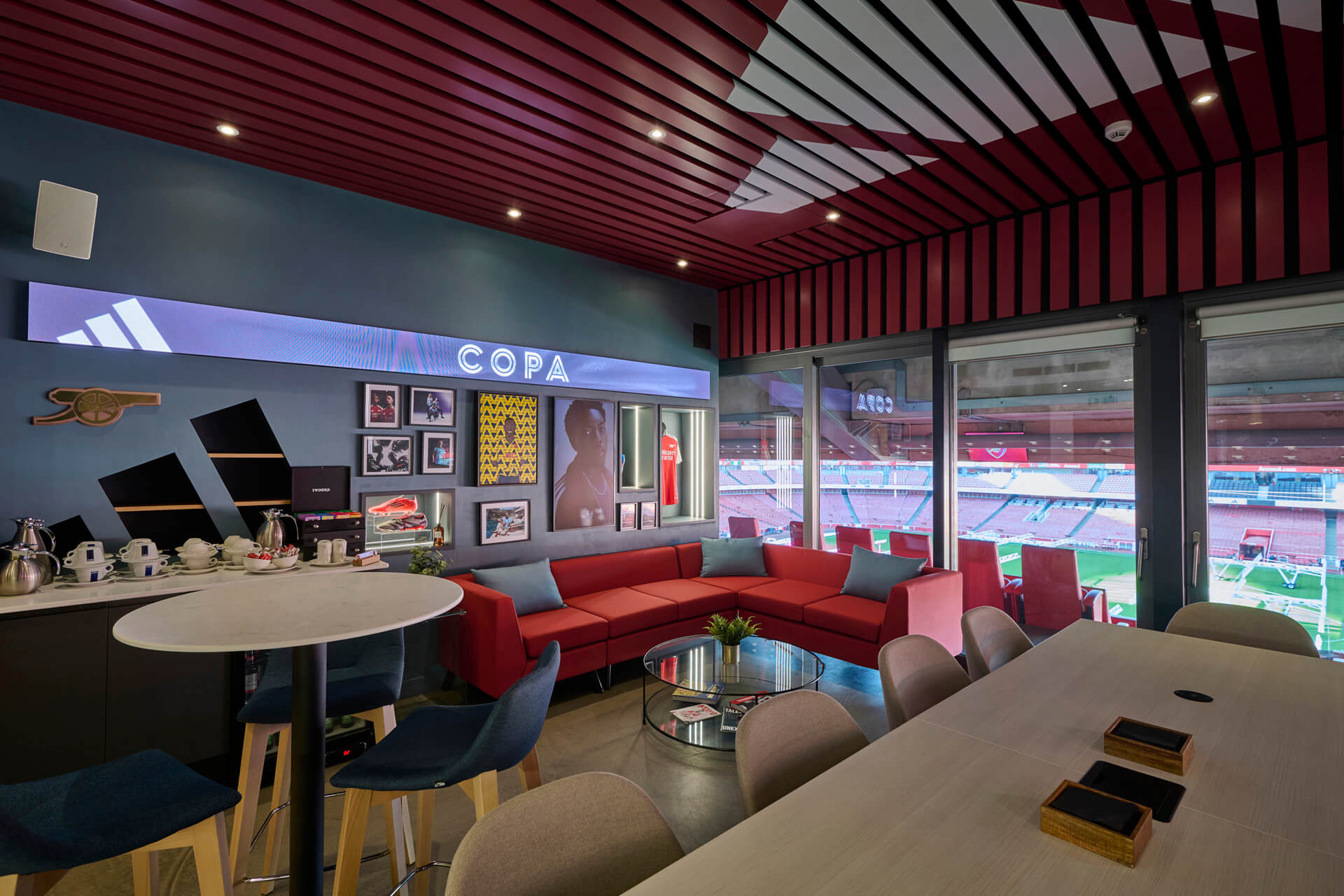
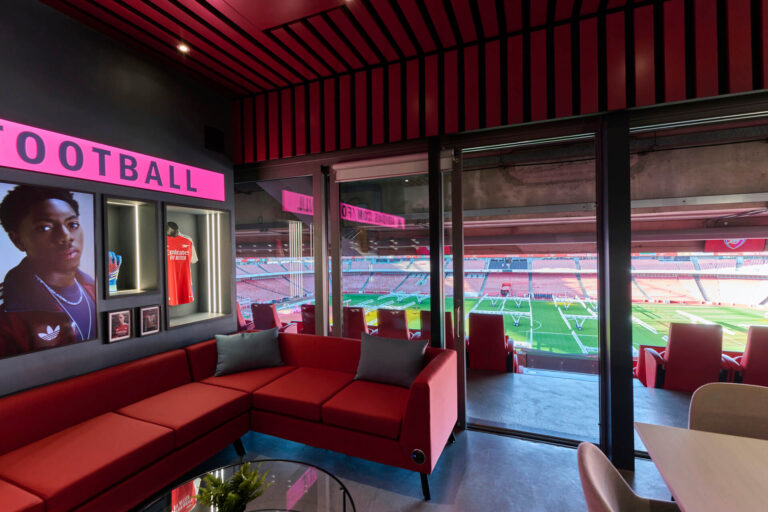
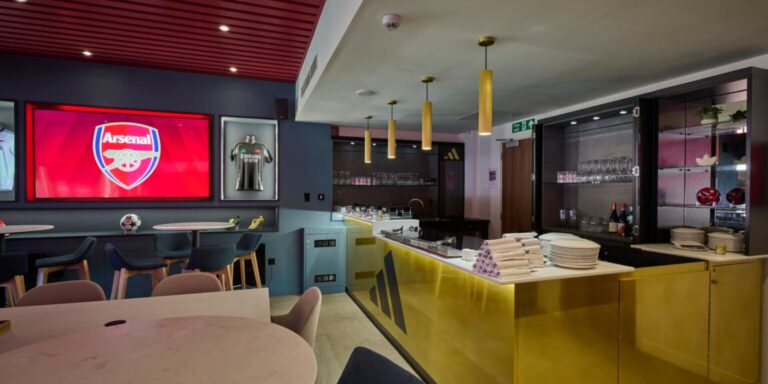
At the Emirates Stadium, for example, DT Sports helped transform the existing Adidas hospitality suite into a premium, multifunctional environment that could support matchdays, meetings, client hosting and campaign activations.
Rather than treating branding as an additional layer, it was integrated into the environment. Custom display boxes showcasing Arsenal shirts and interchangeable memorabilia brought together Adidas and Arsenal, while flexible furniture and integrated AV allowed the space to change according to the occasion.
The result is a space that feels unmistakably Adidas without forgetting where it is.
That is where effective sponsor activation stadium design becomes much more interesting than simply deciding where a logo should go.
Designing Brand Memory, Not Brand Exposure
There is an important difference between seeing a brand and remembering an experience associated with it.
For commercial partners, the latter can be considerably more valuable.
A guest might forget a piece of signage they passed on their way into a stadium, but they are much more likely to remember the atmosphere of a hospitality experience, the quality of the food, an interactive moment or a conversation in a beautifully designed environment.
That experience becomes associated with the organisation hosting them.
This is where sports sponsorship hospitality can create deeper brand connections.
Lighting can establish atmosphere. Materials can communicate quality. Digital screens can provide changing content rather than permanent advertising. Displays can tell stories about the relationship between sponsor and club. Flexible areas can allow product launches, presentations or campaign activations to take place without fundamentally changing the space.
Good design makes the brand present without demanding attention at every opportunity.
How Do Sponsors Use Stadium Spaces for Activation?
One of the biggest opportunities for commercial partners is creating spaces that can evolve.
A stadium may have a fixed location, but the activity happening inside it does not need to remain fixed.
On a matchday, a suite might welcome clients for food, drinks and entertainment before guests head to their seats. A few days later, the same environment could host a campaign launch, business meeting, media event or content shoot.
That flexibility significantly increases the potential value of the space.
The Adidas suite at the Emirates Stadium was specifically designed to work across different uses, with modular furniture, integrated AV and interchangeable memorabilia helping the environment adapt to different group sizes, campaigns and events.
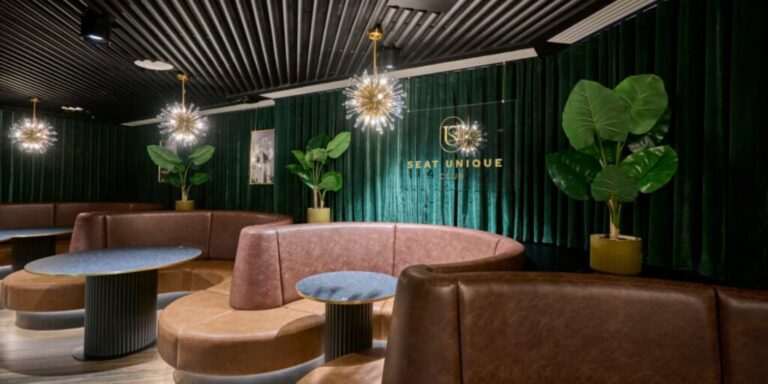
DT Sports’ work with Seat Unique demonstrates another approach to the same principle. Its premium hospitality spaces are centred around the guest experience first, creating intimate and high-quality environments that reflect Seat Unique’s positioning without allowing the branding to overwhelm the hospitality itself. DT Sports’ Old Trafford Seat Unique project, for example, was designed to support VIP dining while remaining suitable for corporate hosting, brand activations and other uses.
For sponsors, this versatility means a stadium partnership can provide far more than visibility on matchday. The physical space becomes a platform they can use throughout the relationship.

The Club Still Needs to Feel Like the Club
Sponsor integration should never come at the expense of club identity.
Supporters and guests arrive with an existing emotional relationship with the venue. They know its colours, history, players, atmosphere and traditions. Removing too much of that identity can make a sponsored environment feel disconnected from everything happening outside the room.
Some of DT Sports’ club-led hospitality projects demonstrate just how powerful that connection to place can be.
At Nottingham Forest, spaces including the McGovern Lounge and Garibaldi Lounge draw directly from the club’s identity and history. The McGovern Lounge references one of the club’s most important figures and its European heritage, while the Garibaldi Lounge connects its identity to the story behind Forest’s famous red colours.
The lesson is just as relevant for sponsor-led environments.
A commercial partner should be joining the club’s story rather than replacing it.
That might mean combining sponsor assets with historic shirts, photographs or memorabilia. It could mean selecting materials that reference both brands, or using digital content to explore moments that connect the sponsor and club.
The strongest commercial sports interiors create room for both identities.
How Can Clubs Create Better Environments for Commercial Partners?
It starts by thinking beyond the sponsorship package.
Commercial teams can sell naming rights, hospitality access and brand exposure, but design has the potential to turn those contractual benefits into something guests can actually experience.
A well-considered environment gives the partnership a home.
It also creates opportunities for commercial teams to demonstrate greater value to existing partners and potentially strengthen the proposition presented to future sponsors.
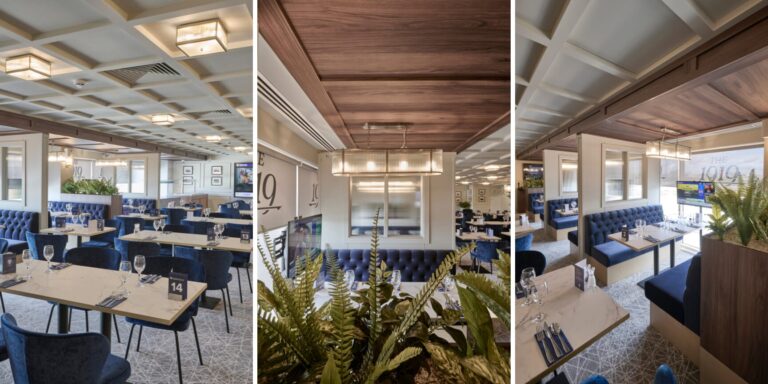
The Hisense Leeds Lounge at Leeds United demonstrates the value of creating hospitality environments capable of serving different audiences and occasions. Designed as a large banqueting space for around 350 guests, its flexible setting allows it to move between matchday hospitality and other events, increasing the ways the environment can be used.
That adaptability is becoming increasingly important.
Sponsors change. Campaigns change. Hospitality expectations change. Even the way brands communicate with their audiences can shift considerably during the lifetime of an interior.
Designing flexibility into the space from the beginning can therefore help clubs avoid environments that become dated as soon as a campaign ends.
Creating Spaces That Work for Everyone
Ultimately, sponsor-led stadium design is not really about designing for the sponsor instead of the supporter.
It is about understanding that modern sports venues serve several audiences simultaneously.
The sponsor wants commercial value and memorable brand engagement. The club wants stronger partnerships, additional revenue and an environment that remains true to its identity. The guest wants great hospitality and an experience worth remembering.
Successful design brings those priorities together.
When sponsor branding is integrated rather than applied, when activation is built into the flexibility of the environment and when club identity remains part of the experience, hospitality spaces can become much more valuable commercial assets.
They stop being rooms carrying a sponsor’s name and become places where the partnership itself can be experienced.
For clubs considering their next branded hospitality suite or stadium partner lounge, that is an important distinction.
The question should not simply be, “Where does the sponsor’s branding go?”
It should be, “What do we want people to remember about being here?”
That is where design can turn sponsorship from visibility into experience.
Frequently Asked Questions
How can stadium design improve sponsor value?
Stadium design can improve sponsor value by turning a commercial partnership into a physical experience. Rather than relying solely on signage and logos, a well-designed hospitality space can use materials, digital content, storytelling and subtle brand cues to create stronger connections between the sponsor and its guests.
What makes a good branded hospitality suite?
A good branded hospitality suite balances the identities of the sponsor and the club while prioritising the guest experience. Branding should feel integrated into the environment rather than added afterwards, helping create a premium space that feels comfortable, memorable and authentic to both organisations.
How do sponsors use stadium spaces for activation?
Sponsors can use stadium hospitality spaces for client entertainment, product launches, campaign activations, meetings, presentations, networking events and content creation. Flexible furniture, integrated technology and adaptable displays can help a space support different activities throughout the year.
How can clubs create better environments for commercial partners?
Clubs can create better environments for commercial partners by considering how the space will support the partnership beyond matchday. Flexible layouts, subtle sponsor integration, strong club storytelling and opportunities for changing content can help create spaces that remain commercially valuable over time.
Why is subtle branding important in sports hospitality spaces?
Subtle branding can create a stronger and more premium guest experience because the space does not feel like an advertisement or showroom. When a sponsor’s identity is communicated through design, materials, storytelling and carefully considered details, guests can form a more natural and memorable connection with the brand.